What Happens When We Center the Territory in an Interdisciplinary Biodesign Course?
Teaching Biomimesis, Biomaterials and Socio-Ecological Challenges
Universidad de Costa Rica
This semester I had the opportunity to participate as a teacher in the course Biomímesis, Biomateriales y Desafíos Socioecológicos at the Universidad de Costa Rica, together with Rebeca Mora and Edgar Pérez. The course is an interdisciplinary space where biology, design, architecture, engineering, and the arts intersect to explore how nature can inspire new ways of thinking about materials, processes, and possible futures through collaborative design.
Throughout the course we work from three main axes: biomimesis, the creation of biomaterials, and contemporary socio-ecological challenges. These themes allow students to move between scientific observation, material experimentation, and critical reflection about the ecological conditions of our time.
One of the central intentions of the course is to question some of the modern divisions that often structure knowledge and practice: human and non-human, culture and nature, art and science. By working across disciplines and engaging with ecological systems, the course invites students to explore alternative ways of understanding and producing materials that are sensitive to local ecosystems and oriented toward the regeneration of life.
This also means questioning dominant paradigms such as “sustainability” or “green design” within the broader discussions of the Anthropocene, understood as the debate around the geological era defined by the planetary effects of human activity. Rather than simply minimizing harm, the course asks how design might participate in more reciprocal and life-supporting relationships with the environments in which it operates.
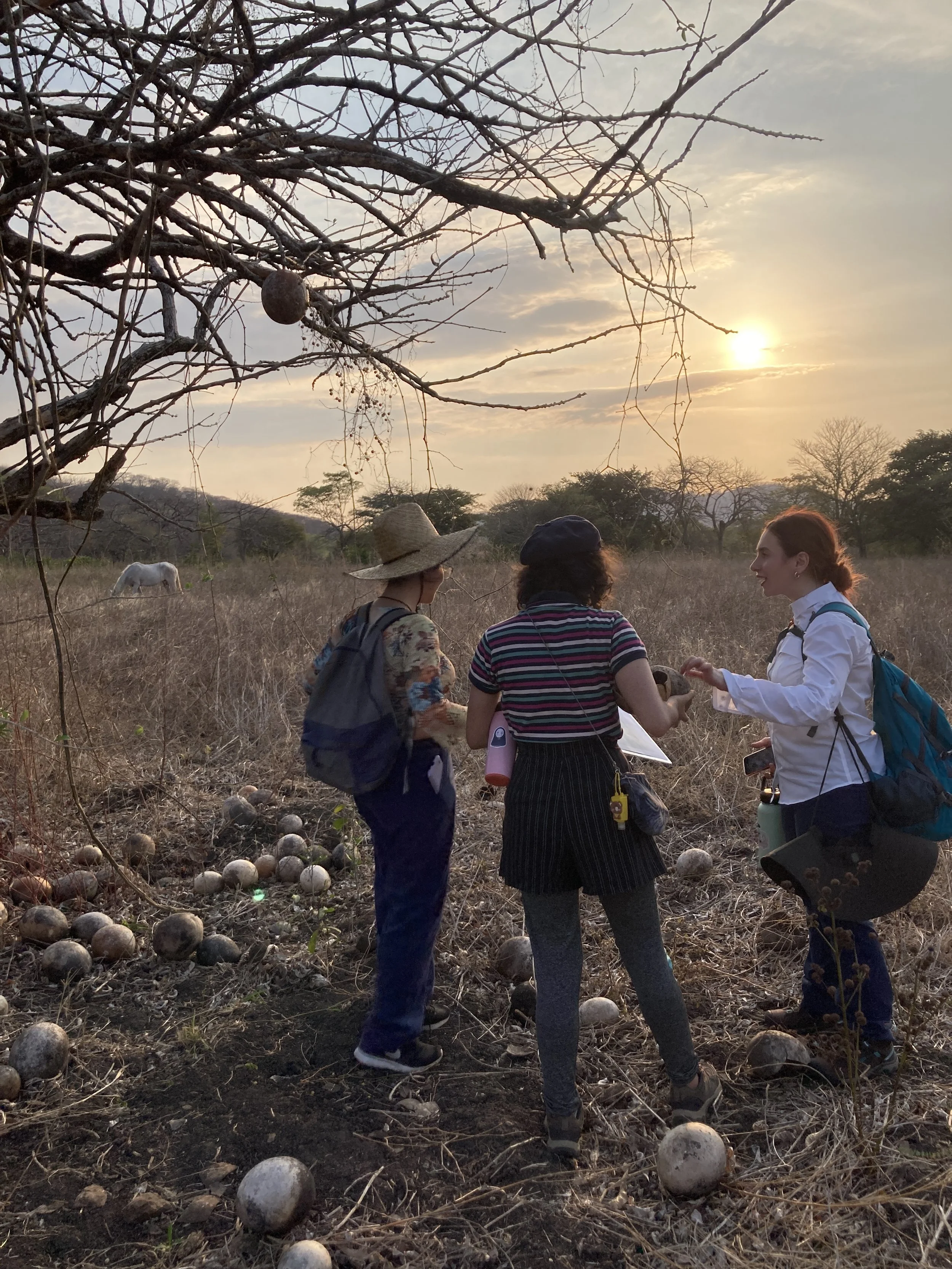
During the semester, students develop a project responding to socio-ecological questions in a specific community. In our case, we worked with the territory of San Vicente, Guanacaste, where the group conducted two field visits. These immersions allowed students to experience the landscape and its community directly, exploring how local realities intersect with global processes.
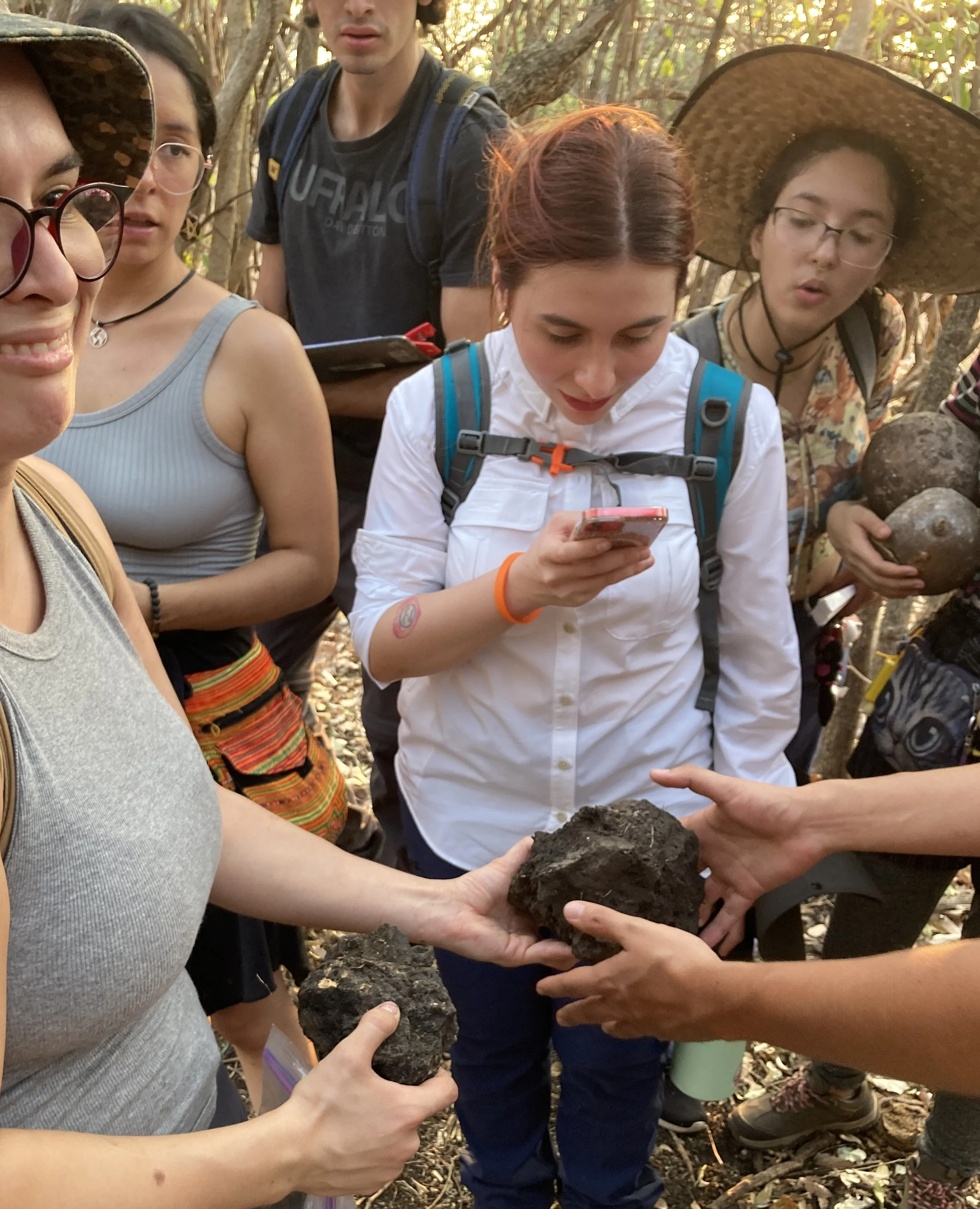
We approached the territory as a multilayered agent shaped by the interaction of many human and non-human forces. Students were invited to ask questions such as: What historical, political, economic, and geological forces have shaped this landscape? Which of these forces are still active today? Who has been affected by them, and how have they shaped the stories of the people who live there? What relationships or assemblages characterize this place? How has the territory evolved over time, and what dynamics of power have influenced it? Are there myths or collective memories that reveal deeper histories of the place?
For me, participating in this course was a meaningful experience. It reaffirmed the importance of creating learning spaces where design is not only about solving problems but about learning to perceive differently. Working closely with the landscape of Guanacaste, with the local community, and with students from different disciplines opened a space for reflection about how design can engage with living systems in more attentive and responsible ways.