
CREATING PURPOSE
CREATING PURPOSE
A Case Study of the Creative Process of an African American Teen in a culturally relevant Maker learning experience
THE REMIXING WAKANDA PROJECT
This presentation was made in the context of the International Conference of Learning Science / ICLS 2020
We are here to talk about The Remixing Wakanda Project, a learning experience we started in 2018 with professor Nathan Holbert from Teachers College and Mike Dando from St. Cloud State University. Also with the collaboration of award winning artist and scholars John Jennings and Stacey Robinson and the participation of professors Erica Walker, Deidre Hollman, Latitha Vassudevan, and Yolanda Sealey-Ruiz, all the team at the Snow Day Learning Lab, and of course the students and teachers that were at the center of this project.
My name is Isabel Correa, I am a designer and a doctoral student in Learning Media and Technology at Teachers College, Columbia University. My research explores the use of creativity and design as means for critical dialogue and reflection about the unstable socio-ecological structures that we inhabit. While my current research focuses on environmental justice I believe that we will hardly be able to take care of our dying planet if we are not able to heal those among us who cannot even breath. Oppression is always intersectional and we cannot think about environmental justice without achieving race justice first. How can we if Black people are threatened for birdwatching in Central Park? The fight of Black activists is also my fight as a Latina scholar and I am willing to follow the lead of Black and marginalized people that are now at the forefront of the crisis we face today.
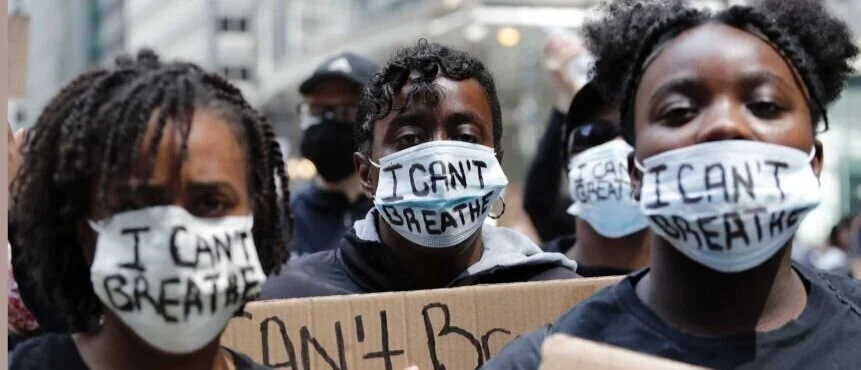
Photography by: Nam Y Huh
It is hard to grasp the level of uncertainty and anxiety we are immersed in today. We go by the day, we wake up every morning, the sun is still there, we attend conferences, well, online conferences because crowds are not a thing anymore, we go to sleep and so on. We are, you are incredibly resilient. But we must not forget the times we are living: We are in the midst of a global pandemic, facing unprecedented environmental instability, and fighting structural racism that keeps tearing us apart when what we need more today is unity and togetherness.
But we are here today to talk about a project that despite all uncertainty gives me hope. As Leigh Patel said today in her keynote, the current pandemic and Black revolution is a portal. I would like to see more learning spaces like Remixing Wakanda at the other side of this portal.
We started this project with a conviction that a scientifically literate society is part of the solution for collective liberation. The challenges we face today require a broader range of voices and visions about the future, a deeper understanding of often ignored present experiences, and a recognition of past stories that had been systematically deleted.
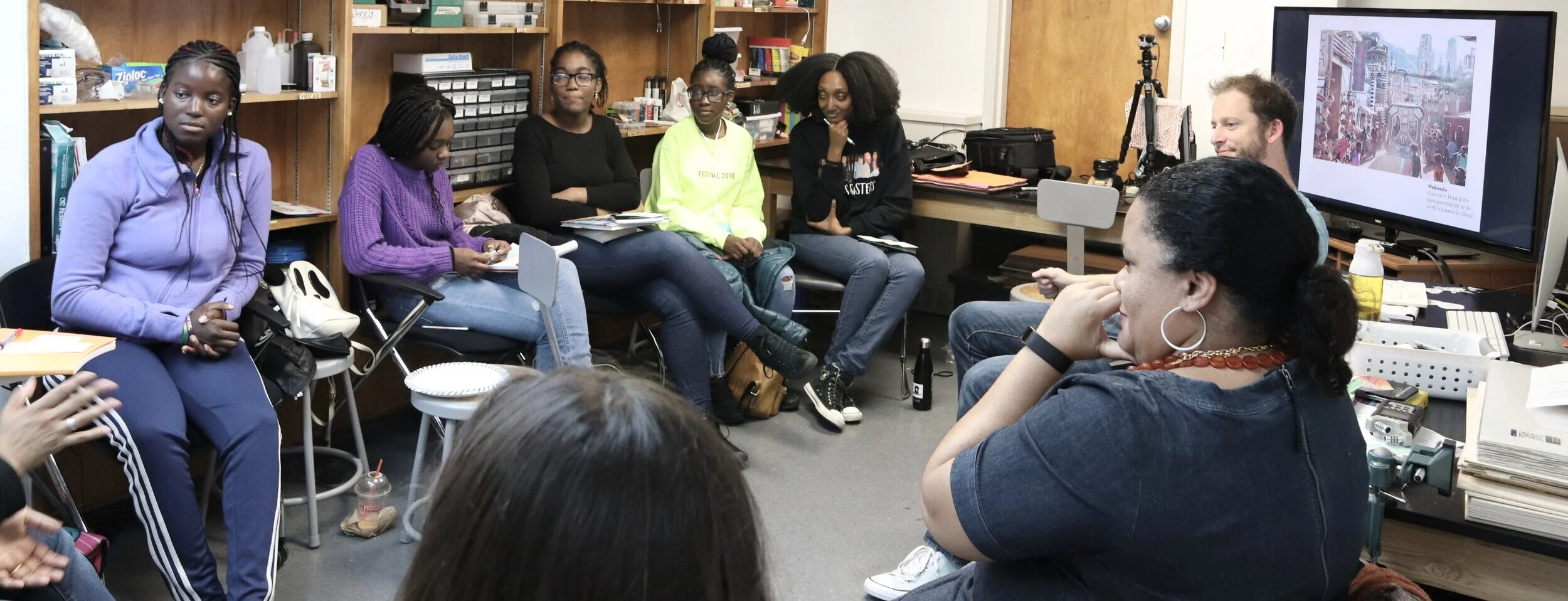
The Remixing Wakanda Project is an educational experience that engages young people in the practice of critical design through the lens of Afrofuturism.
In this experience, communities historically underrepresented in STEM fields alongside Afrofuturist artists, designers and scholars constructed new visions of themselves as creators and activists by reimagining future societies and technologies that center people of color.

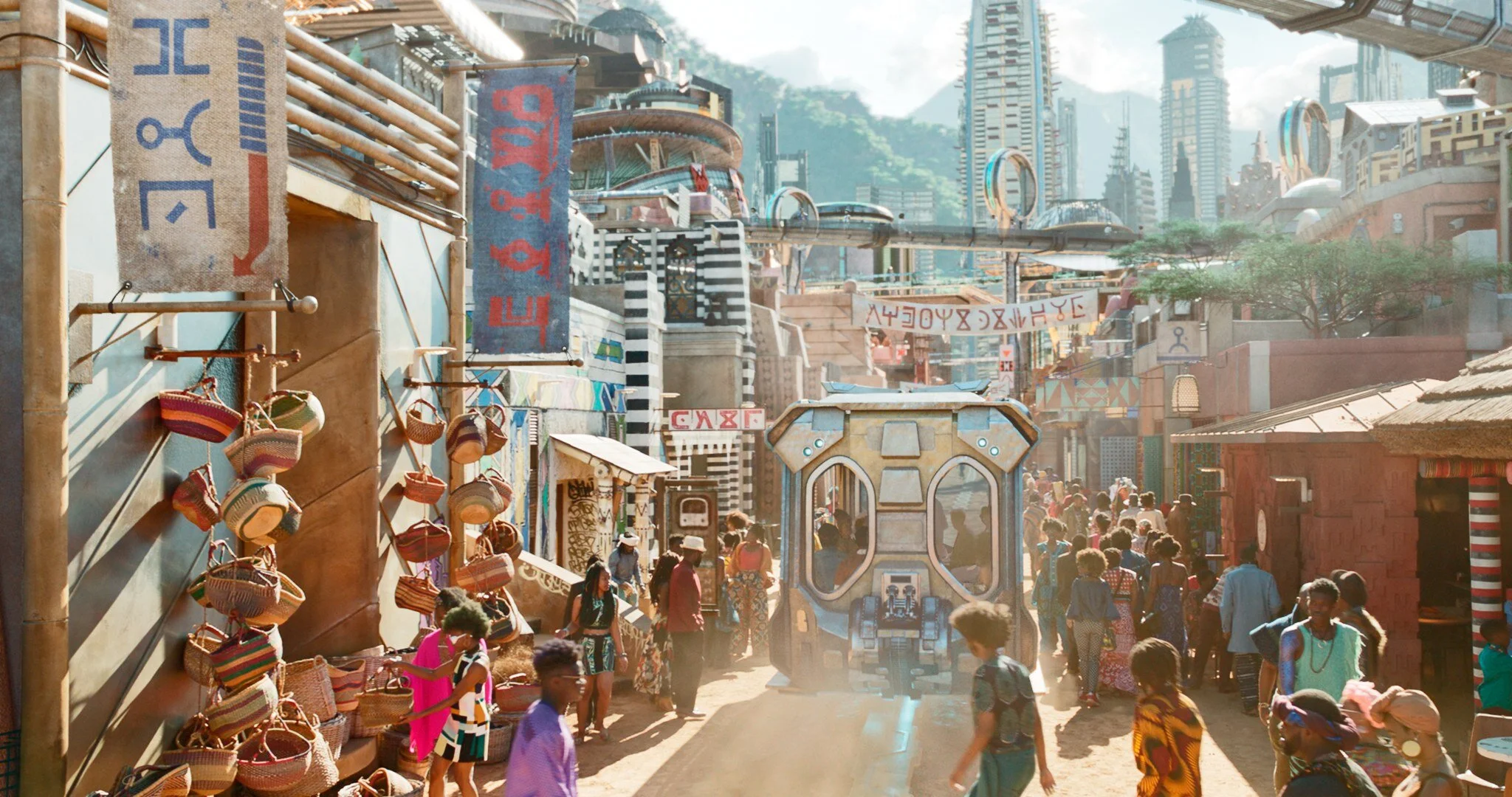
Photography: Black Panther Movie
Inspired by the movie Black Panther we named the project Remixing Wakanda in reference to the fictional home of uncolonized African people. A place of superior technology and unique aesthetic, art, architecture, and practices. We invited participants to create their own Wakanda and use Afrofuturism as an aesthetic framework for participants to play and wonder how a future designed according to their values, aspirations, and needs would look like.
As Mark Dery points out “African-American voices have other stories to tell about culture, technology and things to come” and Afrofuturism provides an aesthetic and epistemological framework for this creative practice to happen.
If you want to know more about the Remixing Wakanda Project and its pedagogical framework, please check this journal article.
Today’s presentation is about an analytical spin-off of The Remixing Wakanda Project that I initiated to explore CREATIVITY within the implementation. Specifically, I got interested in the creative process of a young African American girl that was able to tune into her emotions, ancestry, and identity to show us that a better future is possible.
Creativity has gained attention in education as a fundamental skill for students to adapt in our rapidly changing world, contribute to overcoming humanity’s pressing challenges, and have fuller and meaningful lives. However power and history has largely determined who gets to create, who gets to imagine the future, and even more who gets to build things in a STEM learning environment such as a makerspace.
Despite a rich inventing and crafting tradition, the maker movement is still missing the voices of people of color. Although fragmented and suppressed the African Diaspora maintains connection through music, dance, and the visual arts. Beyond personal enjoyment and self-fulfillment, creativity is for the African descendants a crucial tool for bearing hardship and a shared value grounded on stories of survival.
Not only the African American community has been ignored as potential creators but also our scientific understanding of what creativity is is also deeply rooted in Western worldview. The most widespread theories of creativity that are cognitivist and sociocultural perspectives come from Western and White scholars.
I realized about it when I was doing the analysis of creativity in the Remixing Wakanda Project. I had just finished two classes in creativity. I was playing with several theoretical lenses and suddenly I felt that something was terribly wrong. We designed this implementation with so much care and respect for the African American culture and suddenly once the implementation was over I was imposing a totally alien and foreign analysis into their experience. I was colonizing the data and therefore their experience.
So I went into a journey of learning what creativity means for the African American community. Suddenly I was exploring what for me was uncharted territory. I remember searching for the work of African Scholars in Columbia Buttler’s library and finally finding Asante and Abarry’s African Intellectual Heritage. Afrocentric descriptions of creativity were framed as a philosophy of life. They were both pragmatic and poetic. Words were rooted in ancient knowledge but they were so relevant for today. Karenga’s beautiful definition of creativity reads: “Creativity is to do always as much as we can, in the way we can, in order to leave our community more beautiful and beneficial than we inherited.”
The purpose of this case study is to understand the potential of Afrocentrism to guide not only the design but also the analysis of learning experiences. I decided to observe Salena’s creative process from multiple angles including cognitivists, sociocultural, and Afrocentric perspectives to find out how these lenses can illuminate different nuances of the process. How they differ and how they overlap.
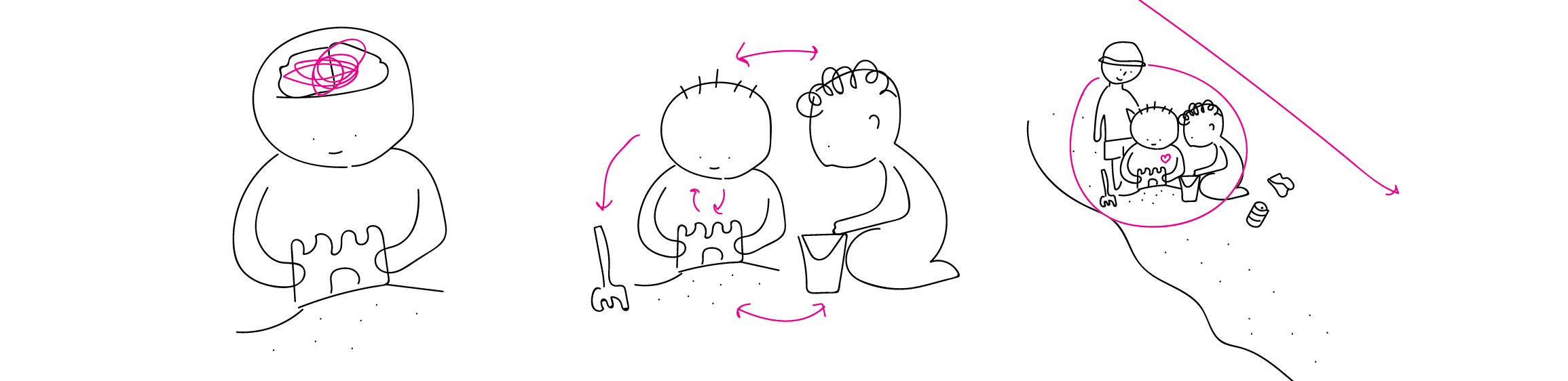
Fig 1: A child building a sandcastle looked through Cognitivist (left), sociocultural (center), and Afrocentric (right) lenses of creativity
As educators and researchers, we hear the word “creativity” all the time but we rarely stop to think about what it means. And if we do, we find out that there is a lot of debate on its meaning, that there are countless definitions, and that each perspective has critical implications for how we attempt to foster and nurture creativity in learning environments.
Broadly speaking there are two main theoretical traditions of creativity in Western academy.
Cognitive lens: Cognitivist scholars that attempted to unveil the meaning of creativity by empirically tracing cognitive structures and processes. However, they concluded that despite the extraordinary outcomes that the mind can produce, creative thinking is nothing but ordinary thinking oriented towards solving a problem. According to this perspective, simple thinking processes such as remembering, planning, anticipating, judging, perceiving, recognizing, and interpreting have the potential to combine to solve a problem in a creative way.
For example, imagine a kid making a sandcastle. A cognitivist will argue that this child is using ordinary thinking skills to solve the problem of building this structure known as a sandcastle. For example, he will “remember”, how a castle looks from the pictures he has seen in a book, he will do some “planning” of what to build and where, and he will “anticipate” that the tower will fall if he puts too much sand on the top, and so on.
Sociocultural lens: Sociocultural researchers, among whom I consider myself, moved the concept of creativity outside of people’s minds and towards the context by shifting the attention from what is creativity to where is creativity. Rooted in Vygotsky’s observations, creativity is not seen as an internal insight but as dialogue between the individual and reality through the means of artifacts such as objects, tools, symbols, and language. Other scholars will expand this notion and incorporate notions of activity theory and distributed cognition to highlight how creativity is basically distributed action across time and space.
Going back to the example of the sandcastle, a sociocultural scholar will zoom out and find out that the child is not alone, he is with his sibling who is “collaborating” by bringing his own ideas, he is also using tools such as bucket that has a particular shape that “affords” a particular type of castle design. The children are in a creative dialogue between themselves and with the material world, with the sand and his tools, and with their own thoughts.
But African American scholars and thinkers also have a world about what creativity means and I added it to my theoretical framework.
Afrocentric lens: Kawaida theory (which in Swahili means tradition) is a set of Pan-African values adjusted to the Diaspora experience and envisioned by the scholar Maulana Karenga during the Black Panther movement in the 60s. He identified creativity as a key value for the African American community and defined it as “to do always as much as we can, in the way we can, in order to leave our community more beautiful and beneficial than we inherited.” From that definition plus an examination of Pan-African values, we can deduce several things First, that creativity in the African worldview like in sociocultural theory, is a social endeavor. The emphasis on the first-person pronoun “we” emphasizes how creativity is a collective practice. In words of Beattie, African people “understand the world in terms of we, in terms of the interrelatedness and interconnectedness of the Creator, cosmos, society, and the person.” It follows that the sense of togetherness characterizes not only humans’ relationships but also human-nature dynamics which are vital to thrive as a species. Furthermore, the purpose of creativity is also collective. Karenga explains that creativity is “to heal, restore, and renew the African community by making things better and prettier and offering to the world the best of what it means to be African and human.” Second, a close attention to the definition also reveals that creativity in the African view is a transtemporal phenomenon. Creativity does not mean made out of nothing. It is a process that happens across time; it is about the new, but also about the old. Because we must build on top of what we inherit even from the broken pieces left after slavery and oppression. And third, creativity in the Afrocentric view is a source of spiritual healing through beauty and benevolence. The African epistemology recognizes emotions and not only rationality, as a valid form of knowing.
Finally, going back to the example of the sandcastle, the Afrocentric view will notice that these children are part of a larger community that inhabit that space. Will honor that the same sand was there from ancient times and was the land of their ancestors. It will recognize the artwork of these children as the ongoing transformation of this space as they work to leave it more beautiful than it was before.
Now I would like to invite you to use the 3 lenses of creativity to observe the creative process of Salena as she designed an Afrofuturist mask to connect with the inner self. I will show and describe key moments of her creative process and you can engage by thinking what lens would you use and what do you see. There is no right or wrong answer, indeed everything could be looked through the 3 lenses. But creativity is like a precious stone, certain aspects of her process will shine more if you look at them from a certain angle or lens.
It’s worth mentioning that we are not observing or analyzing Salena as a creator, nor we are assessing or judging her creative product, but instead we are interested in her creative process, and what we as educators and researchers can learn from it.
So let’s walk along her.
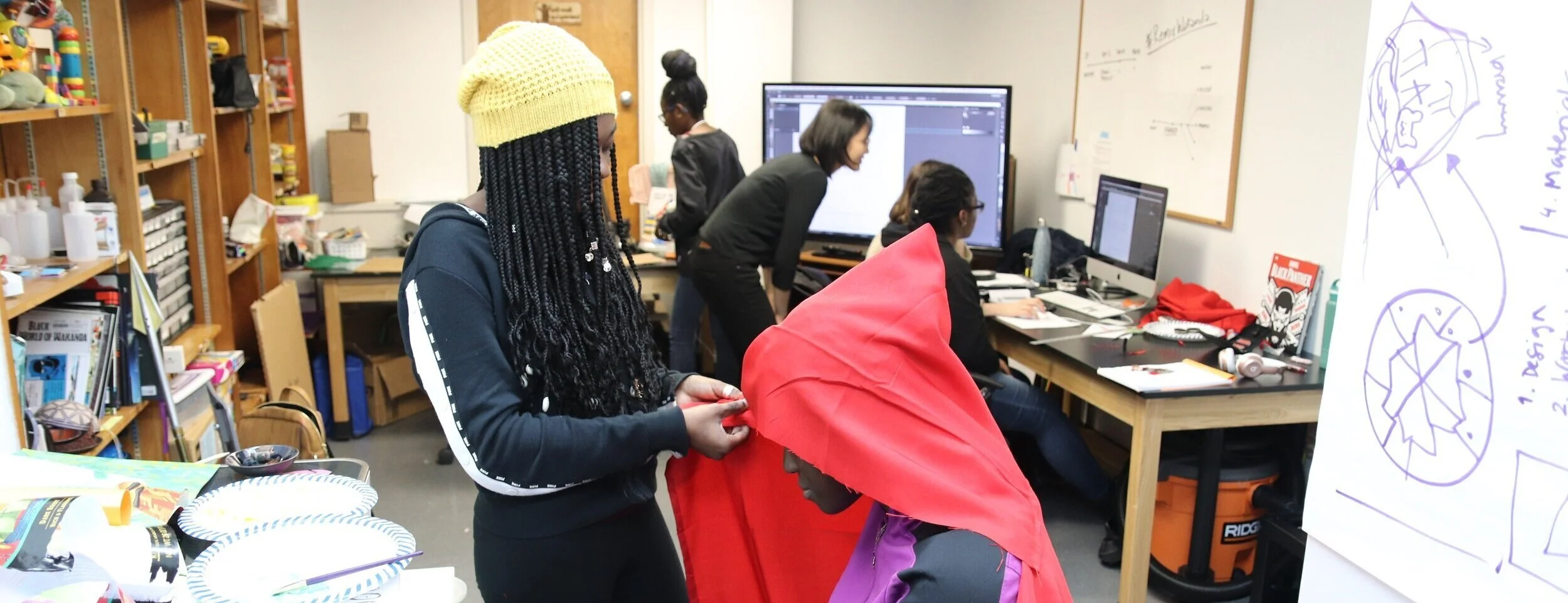
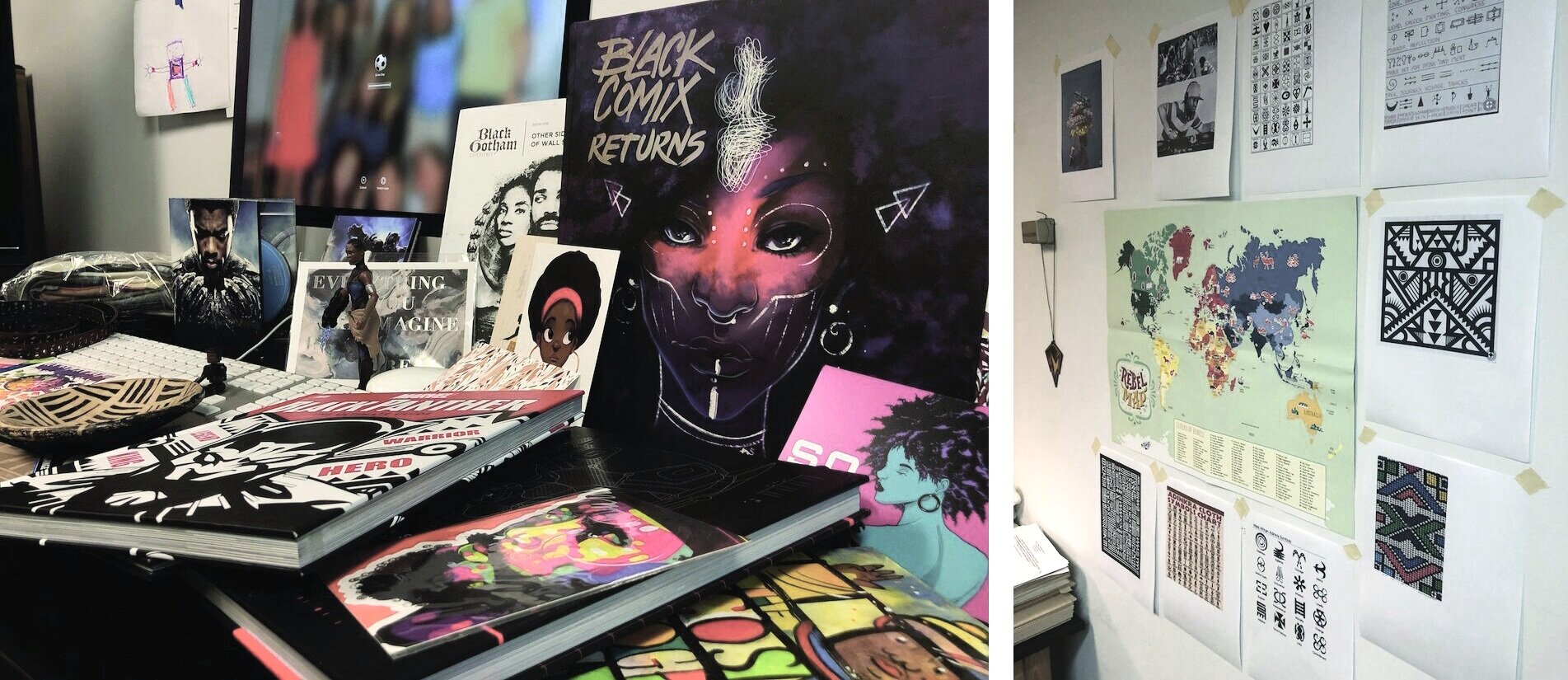
When Salena arrived, participants were discussing initial ideas. She did not know what to do yet and was still trying to make sense of what the project was about. One participant whispered to another: “I am thinking of making a cape, but not like a Superman cape.” Another is looking at images of an Afrofuturist city on the big screen of the computer. Meanwhile, Salena walked around, read comic books and played with a Wakandean alphabet (can you spot her in the photo?)
A sociocultural lens would highlight how the sociocultural context, her friends initial ideas, and the materiality of the space may have shaped her ideation process or provided a framework to think.
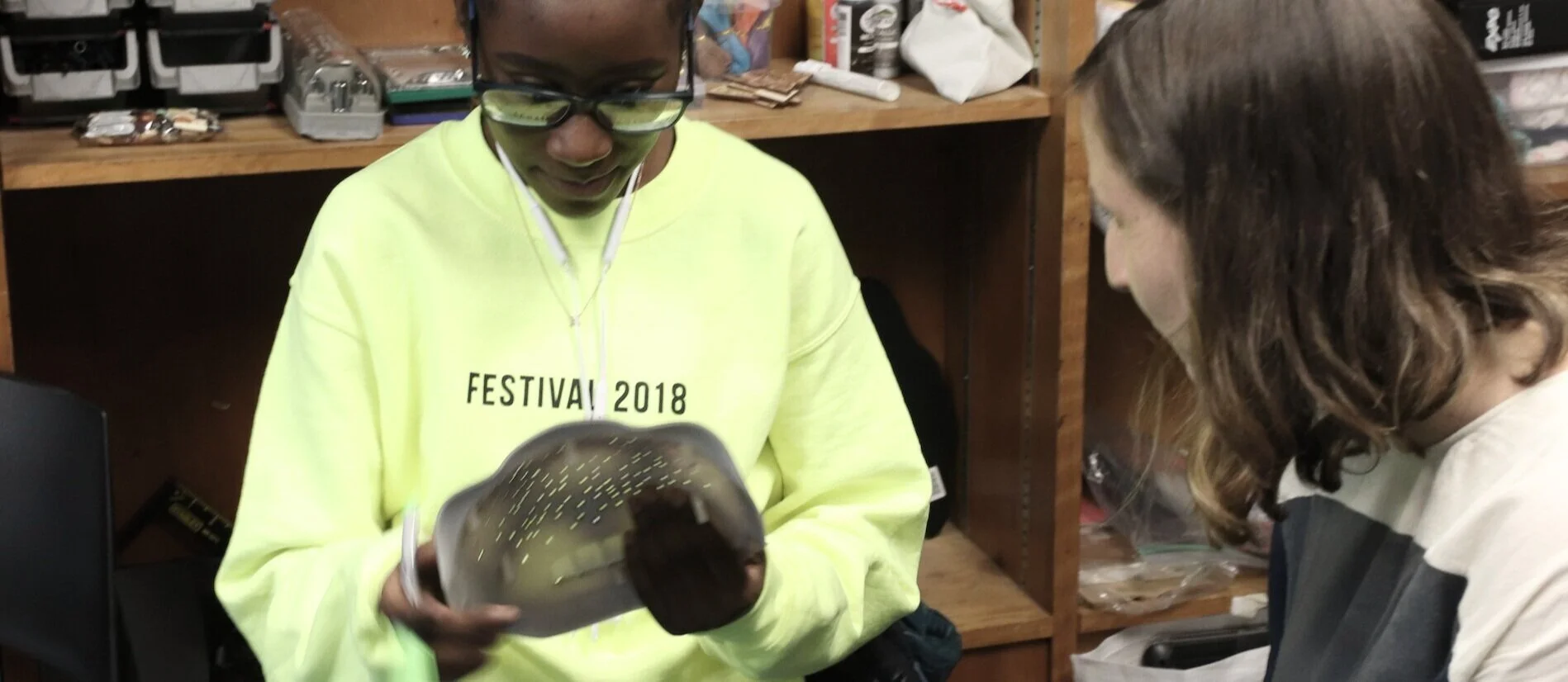
In the next session, facilitators shared materials and tools while encouraging participants to try and touch anything. One facilitator pointed to a shelf filled with old toys and suggested that they could break them down and use them for their prototypes. Salena grabbed the plastic carapace of an old toy and observed it. After that, she asked the facilitator how she can cut two holes in the plastic “like eyes” she said. This is the first evidence that we have of her idea of doing a mask.
From a cognitive lens, the genesis of Salena's idea resides in her encounter with the toy, which suggested the shape of a mask. Her idea is the result of an ordinary thinking process—which is the perception of similarity—oriented toward solving a problem which is figuring out what Afrofuturist object she could do.
A sociocultural lens could offer more nuances to this episode. Salena reinterpreted the toy through her interests and toward her goals. The tortoise toy was not originally intended to become a mask; nonetheless, as Edith Ackerman said “once launched, an artifact takes a life of its own, thus transcending both the author's intention and any singular act of interpretation”. This way, the tortoise through Salena's imagination becomes a mask, and her project emerges as a dialogue between Salena and the toy.
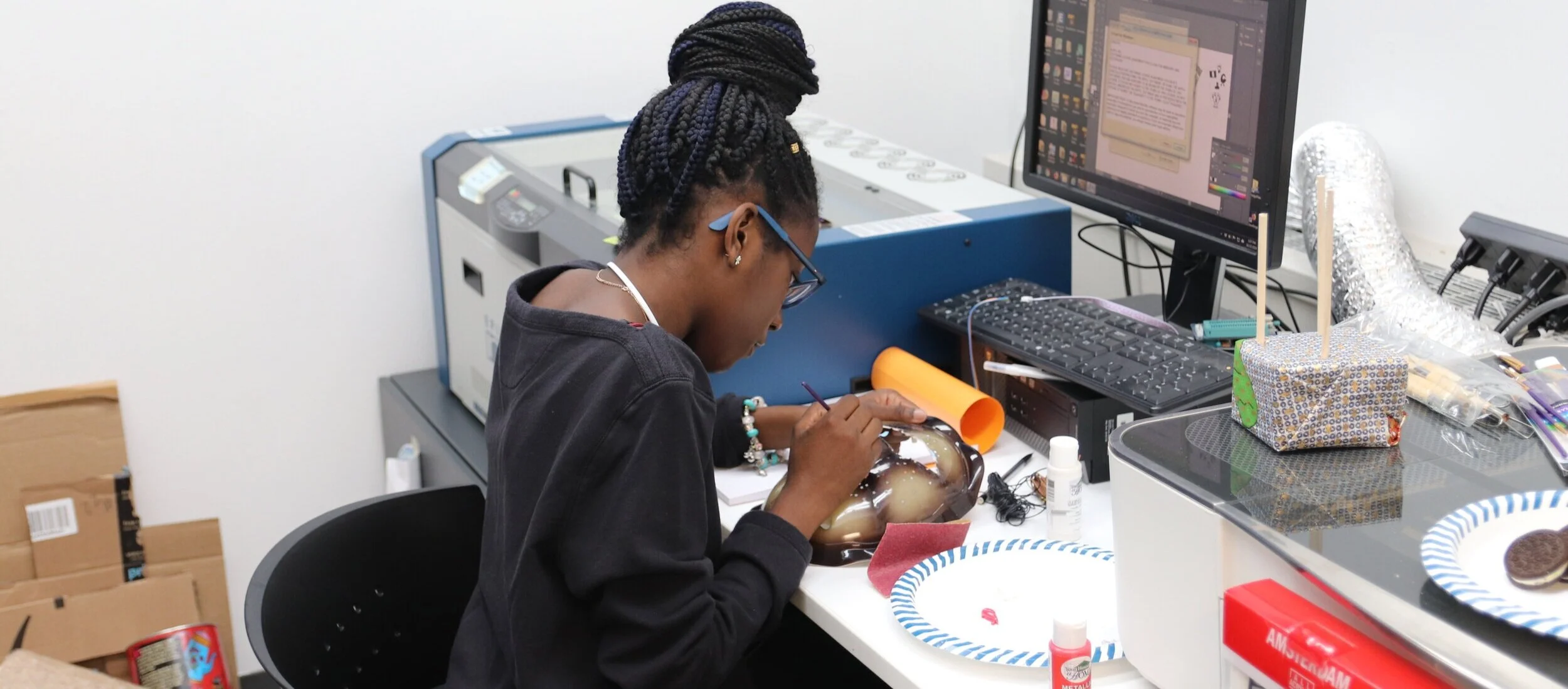
While the idea of the mask emerged in the second week meeting, she defined the purpose and meaning of the artifact later on while she was painting the prototype. She explained that initially, the mask was intended to make the world a better place by changing anything you look at through its eyes. However, not satisfied with the idea she became a critic of her own artifact.
“I was thinking ... you need to think more in-depth with your project, it has to have a deeper meaning.” She added: “My first idea was trash. I was like, ⏤you are definitely not doing that. And then I was like, ⏤What is important to me? You know what? I feel like knowing my inner self is very important.”
From a socio-cultural standpoint, this illustrates how creativity arises as a dialogue not only with other people but also with herself. She stepped back, took distance, and became a critique of her own artifact. According to several creativity researchers, detachment and perspective-taking are fundamental strategies of eminent creators and can also be nurtured in the classroom.
This reflective process can also be interpreted as a cognitive problem finding effort. She is re-stating the problem and positioning her interests at the center to find a solution.
But let’s take an Afrocentric perspective. The African worldview will note that Salenna is not only reflecting but also tuning into her feelings. Afrocentrism would recognize Salena’s emotions as a valid form of knowing. In words of Akbar, the African epistemology accepts that “the most direct experience of self is through emotion and affect”
Let’s zoom in a little bit more into this transformative moment of her creative process. She shared that she was going through a phase of stress that prevented her to connect with her inner-self: “Honestly, I'm a very spiritual person, but [...] there's like no time to burn my candles and put lavender going on and just meditate and just ah relax.”
She explained that in times of hardship or when it is raining, she would go out to her backyard and color pictures as a way to reflect on her mood and feelings. According to her, the act of painting the mask enhanced this memory and subsequent insight that she describes this way: “I started thinking about when I would color, me and coloring, that’s how I get to know my spiritual self”
Then she added... I was painting [the mask], and I was like, wait, THIS is another way people can know their spiritual self!”
From a cognitivist perspective, this sudden insight—far from mysterious—is the result of another well-known mental activity, analogical reasoning (Gentner, 1983). She realized that the mask could work as a means for people to connect with their spiritual selves in the same way that coloring was for her a way to connect with her feelings.
From an Afrocentric perspective, by channeling her emotions and thoughts, the final purpose emerged. She describes it: “The mask is supposed to be like a spirit connector. Where you can connect to yourself spiritually, because you think you know yourself, but sometimes there are certain things you just don't know about yourself, and you need to find out.”
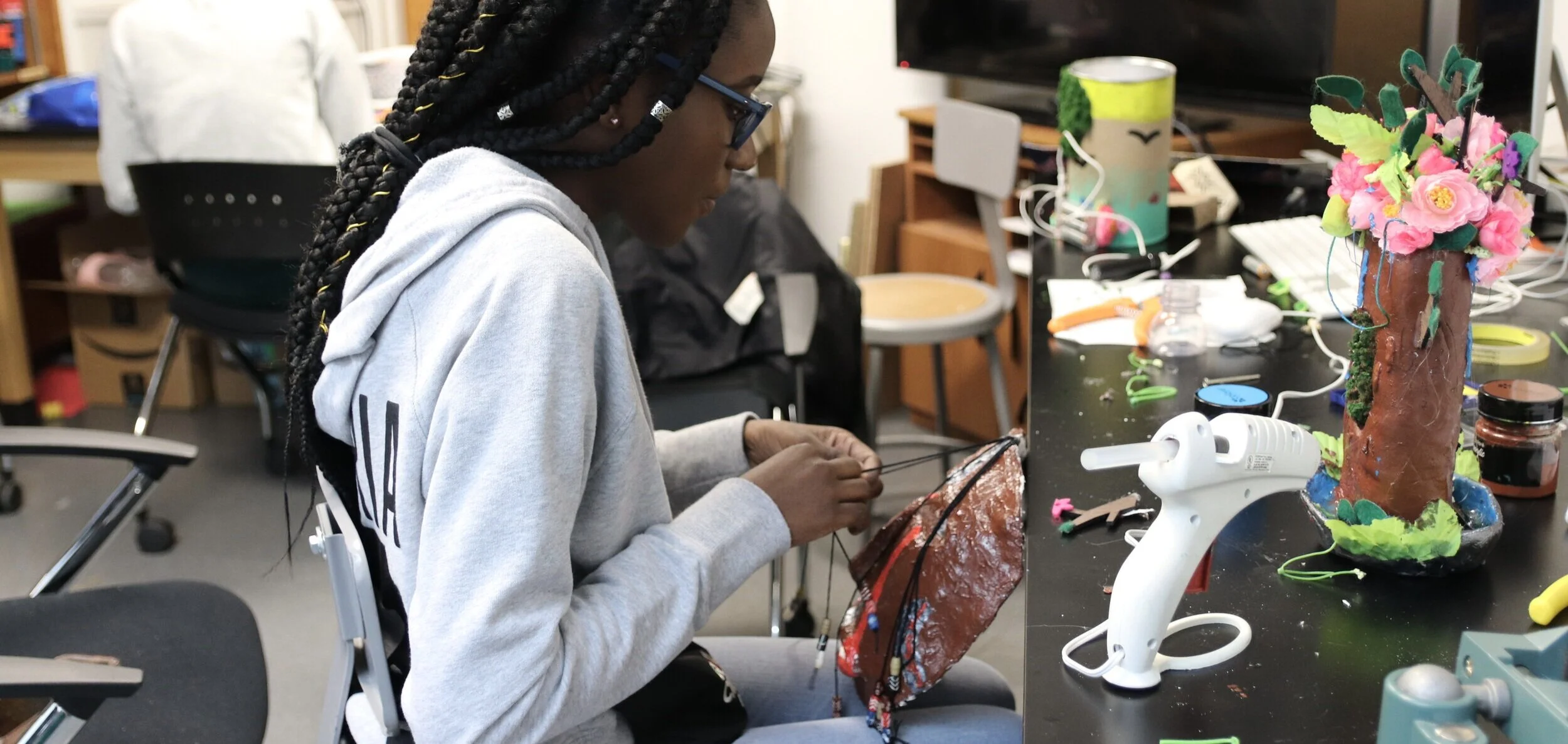
When describing how the mask will connect the inner self, she explained: “it shows you through the eyes. And then it's kinda like you're in the moment rather than just images. you're living it so you can like walk touch and do stuff.”
From a very Western point of view we could say that Salena’s mask is like a spiritual VR technology where you can connect with your feelings. But, more than, Salena’s description of the inner self closely illustrates the African view of self that Beattie describes as “open, a kind of arena, rather than something closed and private.
"In Africa, there are so many animals, [...] you can wear this mask and find out, what is your spirit animal, what's some connections you have to nature, to have with the motherland.” So for her, the mask has a collective purpose which is human's oneness with the natural environment. According to her, the mask reveals connections with nature through the means of spiritual animals.
This illustrates how, in Afrocentric cosmology, all elements of the universe—including people, animals, and inanimate objects—are interdependent as they share a common spirit (Schiele, 1994), and therefore her own spirit.
She added, “the mask promotes unity and togetherness with people you have a spiritual and friendly connection."
The Afrocentric lens explains why Salena conceived others and nature as an integral part of connecting with the inner self. Therefore, far from individualistic, the mask promotes harmonious interdependence, which is a marked characteristic of the African worldview.
And finally a last word of wisdom from Salena, she explained that the mask connects “not only with your present self but also with your past self and your ancestry because your ancestry [...] leads to who you are and what you do.” In those words, she revealed a sense of belonging to a cultural heritage that, despite being historically disrupted by oppression, defines who she is now and what she creates.
The theoretical lenses we use matter. Diversifying our frameworks of analysis can help visualize and legitimize the meaning behind the creative work of people who are not frequently invited to create and express. Through understanding and embracing a more diverse range of intellectual resources and less conventional theoretical frameworks we can begin to recognize, support, and validate other practices, values, goals, meanings, and epistemologies in the context of maker education.
Where do the theoretical lenses you use in your researcher normally came from? What factors should we take into consideration when choosing a theoretical framework? What are the potential implications of diversifying our theoretical lenses?
bibliography
Ackermann, E. K. (2007). Experiences of artifacts: People’s appropriations/objects’ “affordances.” In E. Glasersfeld (Ed.), Key works in radical constructivism (pp. 249–259). Rotterdam: Sense Publishers.
Akbar, N. (1984). Africentric Social Sciences for Human Liberation. Journal of Black Studies, 14(4), 395–414. https://doi.org/10.1177/002193478401400401
Amabile, T. M. (2017). In pursuit of everyday creativity. The Journal of Creative Behavior, 51(4), 335–337.
Asante, M. K. (1991). The Afrocentric idea in education. The Journal of Negro Education, 60(2), 170–180.
Beattie, J. (1980). Representation of the self in traditional Africa. Africa: Journal of the International African Institute. 50(3), 313–320.
Beatty, M. H. (2002). Maat: the cultural and intellectual allegiance of a concept. In J. H. Carruthers & L. C. Harris (Eds.), African world history project: the preliminary challenge (pp. 211–244). Los Angeles, LA: Association for the Study of Classical African Civilizations
Blikstein, P. (in press). Cultural making: Emancipatory practices in culturally-aware maker education. In N. Holbert, M. Berland, & Y. Kafai (Eds.), Constructionism in Context: The Art, Theory, and Practice of Learning Designs. Cambridge, MA: MIT Press.
Blikstein, P. (2008). Travels in Troy with Freire: Technology as an agent for emancipation. In P. Noguera & C. A. Torres (Eds.), Social justice education for teachers: Paulo Freire and the possible dream (pp. 205-244). Rotterdam, Netherlands: Sense
Blikstein, P. (2013). Digital fabrication and ‘making’ in education: The democratization of invention. In J. Walter-Herrmann & C. Büching (Eds.), FabLabs: Of machines, makers and inventors. Bielefeld, Germany: Transcript Publishers.
Buechley, L. (2013). Thinking about making. Presented at the Fablearn 2013. Retrieved from http://edstream.stanford.edu/Video/Play/883b61dd951d4d3f90abeec65eead2911d
Calabrese Barton, A., & Tan, E. (2018). STEM-Rich maker learning: Designing for equity with youth of color. New York, NY: Teachers College Press.
Cole, M. (1996). Cultural psychology: A once and future discipline. Cambridge, Mass: Harvard University Press.
Csikszentmihalyi, M. (1996). Creativity: Flow and the psychology of discovery and invention (1st ed.). New York, NY: HarperCollins.
Dei, G. J. S. (1993). Indigenous African knowledge systems: Local traditions of sustainable forestry. Singapore Journal of Tropical Geography, 14(1), 28–41.
Dougherty, D. (2016). Free to make: How the maker movement is changing our schools, our jobs, and our minds. Berkeley, CA: North Atlantic Books.
Fab Foundation, (2019). What Is A Fab Lab? Retrieved from https://fabfoundation.org/getting-started/#fablabs
Friedman, T.L. (2007). The world is flat 3.0: A brief history of the twenty-first century. Picador, London.
Ramos, D. G. (2010). Creativity and art as part of the elaboration of trauma brought on by slavery. In M. Stein & R. A. Jones (Eds) cultures and identities in transition (pp. 78–91). New York, NY: Routledge.
Gaskins, N. (2016). Edutopia: The New Face of STEAM. Retrieved February 20, 2020, from https://www.edutopia.org/blog/the-new-face-of-steam-nettrice-gaskins
Gentner, D. (1983). Structure-mapping: A theoretical framework for analogy. Cognitive Science, 7(2), 155–170.
Glăveanu, V. P. (2013). Rewriting the Language of Creativity: The Five A’s Framework. Review of General Psychology, 17(1), 69–81. https://doi.org/10.1037/a0029528
Glăveanu, V. (2015). Creativity as a sociocultural act. The Journal of Creative Behavior, 49(3), 165–180.
Gruber, H. E., & Davis, S. N. (1988). Inching our way up Mount Olympus: The evolving-systems approach to creative thinking. In R. J. Sternberg (Ed.), The nature of creativity: Contemporary psychological perspectives (p. 243–270). Cambridge, UK: Cambridge University Press.
Gruber, H.E. (1989). Creativity and human survival. In D.B. Wallace & H.E. Gruber (Eds.), Creative people at work (pp. 278–287). New York, NY: Oxford University Press.
Guilford, J. P. 1977. Way beyond the IQ. Buffalo, NY: Creative Education Foundation.
Hanchett Hanson, M. (2013). Creativity theory and educational practice: Why all the fuss? In J. B. Jones & J. L Flint (Eds.), The creative imperative: School librarians and teachers cultivating creativity together. Santa Barbara, CA: Libraries Unlimited.
Holbert, N. (2016). Leveraging cultural values and “ways of knowing” to increase diversity in maker activities. International Journal of Child-Computer Interaction, 9(10), 33–39.
Holbert, N., Dando, M., & Correa, I. (in press). Afrofuturism as critical constructionist design: Building futures from the past and present. Learning, Media and Technology.
Jenkins, A. (2005). Creativity and resilience in the African American experience. The Humanistic Psychologist, 33(1), 25–32.
Johnson, V. D. (2001). The Nguzo Saba as a foundation for African American college student development theory. Journal of Black Studies, 31(4), 406–422.
Karenga, M. (1996). The Nguzo Saba: Their meaning and message. In M. K. Asante & A. S. Abarry (Eds.), African intellectual heritage: a book of sources. Philadelphia, PA: Temple University Press
Karenga, M. (2014, February 3). Organization Us: Philosophy, principles, and program. Retrieved from http://www.us-organization.org/30th/ppp.html
Literat, I. & Glăveanu, V. (2018). Distributed Creativity on the Internet: A Theoretical Foundation for Online Creative Participation. 17.
Mbiti, J. S. (1969). African religions and philosophy. Nairobi: East African Educational Publishers.
Merriam, S.B., & Tisdell, E.J. (2016). Qualitative research: A guide to design and implementation. San Francisco, CA: Jossey-Bass.
Muhwati, I. (2010). Cultural dialogues of agency and transcendence: The Shona and Ndebele example. Journal of Black Studies, 41(1), 151–163. https://doi.org/10.1177/0021934709332721
Nijstad, B. A., Diehl, M., Stroebe, W. (2003). Cognitive stimulation and interference in idea-generating groups. In P. B. Paulus & B. A. Nijstad (Eds.), Group creativity: Innovation through collaboration (pp. 137–159). Oxford, UK: Oxford University Press.
Nobles. W. (1972). African philosophy: Foundations of Black psychology. In R. L. Jones (Ed.), Black psychology. New York, NY: Harper and Row.
Perkins, D. N. (1981). The mind's best work. Cambridge, MA: Harvard University Press.
Rogers, C. R. (1954). Toward a theory of creativity. A Review of General Semantics, 11(4), 249–260.
Runco, M. A. (2011.) Divergent thinking. In Encyclopedia of creativity: Vol. 1 (2nd Ed.), M. A. Runco & S. R. Pritzker (Eds.), (pp. 400-403). San Diego, CA: Academic Press.
Schiele, J. H. (1994). Afrocentricity: Implications for higher education. Journal of Black Studies, 25(2), 150–169.
Smith, S. M., Ward T.B. & Finke R.A., (1995) Cognitive processes in creative contexts. In S. M. Smith, T. B. Ward, & R. A. Finke (Eds.), The creative cognition approach (pp. 1–25). Cambridge, MA: MIT Press.
Sternberg, R. J., & Lubart, T. I. (1999). The concept of creativity: Prospects and paradigms. In R. J. Steinberg (Ed.), Handbook of creativity (pp. 3-15). New York: Cambridge University Press.
Temple, C. N. (2010). The emergence of Sankofa practice in the United States: A modern history. Journal of Black Studies, 41(1), 127–150. https://doi.org/10.1177/0021934709332464
Vossoughi, S., Hooper, P. K., & Escudé, M. (2016). Making through the lens of culture and power: Toward transformative visions for educational equity. Harvard Educational Review, 86(2), 206–232.
Vygotsky, L. S. (1980). Mind in society: The development of higher psychological processes. Cambridge, MA: Harvard University Press.
Weisberg, R. J., (2006). Creativity: Understanding innovation in problem solving, science, invention and the arts. Hoboken, NJ: John Wiley & Sons, Inc.
Weisberg, R. J., & Hanchett Hanson, M. (2013). Inside-the-box: an expertise-based approach to creativity in education. In J. B. Jones & J. L Flint (Eds.), The creative imperative: School librarians and teachers cultivating creativity together. Santa Barbara, CA: Libraries Unlimited.
Wertheimer, M. (1982). Productive thinking. Chicago, IL: University of Chicago Press.
Zhang, J., (in press). Creativity as sustained social practices: Four pillars for creative learning design. In N. Holbert, M. Berland, & Y. Kafai (Eds.), Constructionism in context: The art, theory, and practice of learning designs. Cambridge, MA: MIT Press.